Sometimes the evening speaks loudly

starry, starry night

“…The stars need darkness or you would not know them.” –Dorothy Trogdon, poet

The day presents itself to him at an unacceptable hour. The time of night when end of one day hasn’t completely surrendered to another. But the early thin place wasn’t an enemy by any means. The typhoon-like week that led to this moment hadn’t finished depositing its day-timer detritus. He is tired, but a certain contentment holds sway and hunkers down in the deep parts that make themselves known at such times.

Faces like so many stars in a sequined heaven begin to seep into his memory. As though bobbing up from underwater, one face after another implores to be remembered, mentally photographed and then, in the quiet of gifted moments, developed into softly gilded perfection. Was this mere whimsy, the unfettered gloating of overly romanticized ideas? Life was good. Why then the unasked for intrusion of yesterday’s communion? Couldn’t the wealth of immediacy be enough, just this once? Is then always so much better than now?

He wondered to himself whether he should banish such ghosts or to allow them free passage through heart hallways a little dusty that often smudge such images. He chooses the latter and, for a few moments, coffee now cold in his cup, joins them in meandering parade through the ballroom of his conscious. Through closed eyes he draws deep breaths of the night air and touches each face. But in doing so, they vanish, leaving only his finger pointing heavenward – the place where each of them are called. The place to which they call others.

Then there is clarity. Without the backdrop of the deep black night, stars are not stars. Without stones, the river doesn’t dance. Without falling leaves, the wind makes no sound and the world is just a little sadder. He smiles, dares a sip of cold coffee, and steals another breath from the evening, not so quiet after all.

Image: www.pptbackgrounds.net

“There once was a girl from Nantucket…”: why I write poetry

poet's pen

“There once was a girl from Nantucket…”

There are as many ways of self-expression as there are people…self-expressing. One can say something in many and varied ways. There, see? Unlike other, non-poetic forms of writing, poetry evokes rather than explains. Now, good prose also can do this. But, somehow, there is an economy of words and focus of emotion in poetry, a kind of escalator narrative that moves us up and down at will, that prose cannot seem to create in as neat and succinct a way. Prose tells the story of our life on paper. Poetry crunches up the paper and then makes sense of the wrinkles. Prose seeks to pull petals off the flower and, in deconstructing it, find it. Poetry imagines the soul of the flower and, in ways both sensory and direct, introduces us. Prose tells us how beautiful the flower is. Poetry tells the flower how beautiful we are. In a real sense, poetry is a flower, a kind of natural face given to the mystery of our being.

Poetry doesn’t take us from A to B. It asks why we even need B in the first place, or at least takes the longer, scenic route. Prose needs readers to engage with its detail and form. Poetry needs but to exist since it is both beauty and the suggestion thereof. It is an invitation not to read but to be read. “If a tree falls in the forest” is a question we ask ourselves. The poet shows how cool a silent tree really is. It is the art of words rather than the science of language. Moreover, the lucidity and dominance of its spatial, nuanced non-rhetoric leaves a big, front door through which those of us thirsty for something other than exactitude and definition may find our Narnia. A good narrative will give us the tale, the wardrobe, the place. Poetry helps us live the tale. Prose ushers us to turkey dinner at Grandma’s house. Poetry ushers us to Grandma whose heart was the crucible of love out of which came our dinner.

I write poetry because, for me, it is prayer. It allows extreme right-brained thinkers like myself to engage with words in more dancelike fashion, treating them more like lovers than telemarketers. I can simply close my eyes and, through the mystery of my subconscious, knit to God’s own being, walk through the veil of here to there without having to explain why or even how I got there. Poetry is perfect for people who can’t figure things out but for whom the things are just as cool unfigured out. Mystery wins every time.

If you had no idea what the hell I just wrote, you’re not quite ready for poetry…just yet.

Photo: www.blog.ted.com

Thoughts from the beach…

I once wrote these words in commemoration of a magical time with my wife on the Oregon coast. I repost to commemorate the same, 10 years later, for an even more magical time on the Washington coast.

robertalanrife's avatarRob's Lit-Bits

Thoughts from the beach…

To commemorate a beach walk with my wife.

May 12, 2003


1

Beauty.  Random squalor in effortless

Wave deposits her treasure

In our efforts to build that which

Hand could never grasp we trade

Quintessential.  Queer.  Quiet for

Quantifiable.  Quick.  Casual.

Oh, such grand wordless words-

Wonder, World-watched prayers

Waiting…waiting.

That which is unseen – now

I see.


2

Wind-soaked beach-stained

Dark; darker still where waves

Kiss the sand of my imagination.

Flat boards float on round earth

Plays with my finitude and finer still,

Fills my earthen breath with

Deeper wind.


3

Dare she flits on so light a wing,

Fading into vastness, blue

The sky and water, one.

Where one defines what much cannot

In so many syllables contain

The vast smallness of it all.

View original post

“The Poet”

This piece by Kate Harris comes from a favorite blog of mine, Art House America, and is just too rich not to share here in my own little creative corner of the cyber world. I hope you glean as much from it as I did…and will for some time to come.

Bono

“Not simply because it reminds me of those happy, familiar sparks of gladness in my own heart, but more because it reminds me that the job of the poet — of the artist — while weighty and significant on a grand scale, is really first and foremost a work of invitation. The poet is one who toils and works and feels and sorts through all manner of things seen and unseen and then welcomes others in, beckons them, calls to them, “Come and see what I can see!”


     This invitation echoes a greater invitation by the first of all creators who begs us to see as He sees, to love as He loves. The poet, the artist-prophet, mirrors Him as closely as anyone — seeking to see rightly and truthfully, to give proper expression to that vision, and finally to invite others in to those experiences such that they might be changed. It is a worthy endeavor….The poet is one who gives us new eyes to see, who helps us make sense of what we experience, and who invites others to see more deeply into what it is that their experiences mean.

In the delight and joy of those who ever strive to see and tell, R


Photo: Steve Garber

Seeds

tangled roots

Like pervasive, unwanted seeds, words find cracks and root in places where gardens are meant to be…


*

Words, cold and brittle, cast out like seeds

lay in heaps on a warm, tender earth.

*

One sinks lower than the others and

pushes roots down, cracking open forbidden soil,

*

wrapping itself around innocent roots

like the tendrils of some old, persistent tale.

*

Vines grow where magnolias were before.

They boast their unwelcome appearance,

*

and find unseen cracks, where gardens are meant to be;

places reserved for the fragrant beauty of silent afternoons.

*

Where once the healthy stalk whispered her delights

into laughing ears, ready for the rest of the story,

*

now she lay choked, emaciated.

For want of sun, flowers, once taut and certain

*

cry out against their wanton pursuers.

“This is not life!” they cry.

*

Pull me from this place of shame

and replace these bony fingers of macabre intent

*

with a throat renewed, a deeper breath,

and pause to stretch and sigh once more.

Picture thanks to www.spinningspokes.com

Porch Poems III

Ducks in the cattails

Sometimes I think I get stuck

like ducks in the cattails,

grinding out their path;

their bodies, tired,

their wings, trapped,

their sight,

gone.


Cleaning out the shed

There are days when tasks are hard,

like cleaning out the shed.

I always find more

stuff I don’t want;

lost things that

speak of

me.


Crazy Uncle Roy

Medicine Hat, Alberta:

there, crazy uncle Roy

reached under the porch,

pulled out a snake,

grabbed its head

and kissed

it.


Snakeskin Boots

I grew up in Calgary,

where cowboy hats are cool.

I was cooler still

with snakeskin boots

my uncle

made for

me.


Staring at Sunsets

Shared, the wafting summer light

azure-orange, brightness

unfailing, obtuse,

with promises

of happy-

ending

days.

When a song knows you

On that rare occasion when comes a song that catches in your throat and your moistened eyes lift; your heart swells and your tongue cleaves in silence to the roof of your dry, gaping mouth, one can only listen…

Music has wafted its way through the corridors of this boy’s life without either asking permission or signing a release form. At any given moment a particular song or sonata or ambient guitar piece has bored a hole into the otherwise forbidden regions of my soul where God doesn’t even like to go. And it stays. It stays and plays, disturbing the water leaving manuscripted ripples of memories repressed or forgotten, faces attached to long lost friends, pieces of time squandered and scattered on the floor.
I don’t mean to sound sullen for music has also drawn, even driven me, by the Spirit into all manner of delightful wilderness as well. It leaves its mark gently, but insistently, borrowing from what it knows will always push my heart into the deep end where my affections direct my thoughts and together, meet my will.

And I am changed.

It does seem a little more than mere serendipity when just the right lyric encased in the perfect package of notes, irrepressibly good and right, finds its way to my hungry ears. There is that moment of instant recognition. Someone knows this, has felt this before me and I am not alone. At these times a kinship is unveiled. Someone is already walking with me along pathways I had thought previously untraveled, and soothes me in the knowledge that they’re only unknown to me. Others have traversed these waters, even successfully, and been found by God, waiting on the other side; the same God you may have inwardly chided for his conspicuous absence, barely perceivable as you stumbled and groped along.

I remember the first time I ever heard Bridge Over Troubled Water. It occurred to me how duped I had been into believing I had already heard the best song ever, which at the time might have been the Thomas, the Tank Engine theme song. I was seven years old and nothing would ever be the same. I begged my parents to purchase the album (now extinct flat, black disc-like things with countless grooves magically holding music).

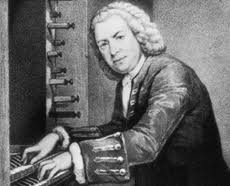
The next similarly visceral encounter was my discovery of Jesu, Joy of Man’s Desiring by…well, I had no idea then. Cliché as it might be among the classical music elite, no one can deny, in good conscience, the genius and mystical profundity of the piece. To this day it shatters me every time I hear it.

I was captured again when, on a drive from Calgary to Cranbrook, B.C., I encountered Bach’s Wedding Cantata and the opening Kyrie of Schubert’s Mass in Ab for the first time. To say I was captivated would be an understatement of hyperbolic proportions. I had to pull the car over, so spellbound was I at the unforgivably beautiful refrains. My love affair with this music continues unabated.

You may think it trite by comparison but, lately, my descent into a blubbering, snotty mess has been evoked by a simple little song, We Were Better Off, by Elenowen, a barely known duo. It has taken its place among those selections added to Rob’s warning,-this-one-guarantees-tears-so-avoid-public-places playlist. Go ahead, listen and tell me what you think. I dare you to do so without at least a hint of connection. If you feel nothing at all, you’re either at the pre-coffee stage of your day, a grumpy pragmatist, or a zombie (no pressure).

Music, like the people with whom we share it, comes at the most unexpected times. And, when it does, my self-imposed melancholy is banished if only for a moment as the notes probe places left unexplored and I am placed under God’s laser-specific microscope. Now that’s theology. If I were to say at those times that I now knew this song, it is then God reminds me that, in fact, it is the song that knows me.

Da signe al fine.

Sonnet from an airport lounge

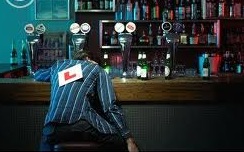
This is not autobiographical. I repeat, this is not…oh never mind, you decide. As a recovering alcoholic with almost 10 years sober (no, stop, please…enough), this is an all too familiar scene. Trying to wash away fear, doubt and pain while dulling the insistent voice of comfort offered us by God and stranger. Hurting together is still better than drinking alone, n’est pas?

Sitting in the airport lounge with spirit bayoneted,

half-hearted conversations, words, more words, tumble out, un-netted.

Ne’er-do-wells sing trashy songs, their voices loud, un-vetted,

scare away all vestiges of peace,  un-still…

* * * * *

Seeking solace, groping hope from speaker’d plane route changes,

arrivals swapped as airplanes, circling round, my vision ranges.

Slow, so slow and slower still the time, these hours, outrageous

offer little respite from these voices, shrill.

* * * * *

But in the lateness of this hour, e’en now there comes a voice,

some gentle, waltzing words of comfort land, offering a choice

to listen hard, to find, to seek and fin’lly heed this noise,

since Whiskey Sours failed their task, this heart to fill.

* * * * *

So much to lose, through burden’d care;

so much to gain when life we share.

Look now, the hidden road


Look now, the hidden road denies these footsteps

their certainty, unsure though they wend,

through what little solid soil succumbs

to plodding, silent shoe-footfall.

Forward slowly, halting back apace,

how often my wayward way, the Way, ‘tis not.

These choking vines abort momentum,

spilling out on soft and silent stones

their devious designs along this rutted path.

A fog, a mist, a nightling now,

I deign to trust what lying eyes will tell,

list’ning instead for the rustling wind

some branch to bow and bend and brush my face

and share with me geography.

Unsteady though the way must be

my hands atremble reach for other hands

for, only then, does lostness find its way.