More Haiku for you

Below is the universal symbol for Longing in Chinese, Japanese Kanji, and Korean Hanja

Where else should I be,

but in this sacred presence;

to find my way here?


Once you did find me,

a broken, tear-sodden wretch;

and still you loved me.


One thing I have seen,

an onomatopoeia

has brandished this scene.


Once upon a time,

there shines a glittering light,

then and now and then.


When night is falling

into day from night before,

day has truly come.


Feed me on your flesh,

nourish’d from still deeper veins

and my soul starves not.


Still strings vibrating,

filling the air with sad songs,

and still we’re singing.


I can see your face,

time and space interrupted…

Can you see my face?


Mystic reverie

of clouds, unknowingly, pass.

Entranced in longing.


Satisfied am I

in a Eucharistic haze

of understanding.


Feast of quotidian delights


Swollen palettes, satiated on mystery meat, bread and corn

husked beside the red swing-set after splish ‘n splash at noon.

Summer’s silly sprinkler dance anoints the day

with laughter fit for kings’ tables finely festoon’d.


Checkers played with pennies and monopoly pieces,

and, later, fake dollar bills found buried in the car seats.

Dinner table taunts from Mom and Auntie June

to remove from there our sad and smelly feet.


Now when moon and sun compete for sky,

I chuckle one last sigh before I hit the hay.

My buddy’s fresh, new farts remind me

how soon, in restful sleep, he’ll pay.


Sometimes, when pompous stars have fin’lly come and gone,

and, creeping on the ledge beside my window, at this height,

I wonder when, once more we might revel in  

this feast of quotidian delights.

And the music played on…

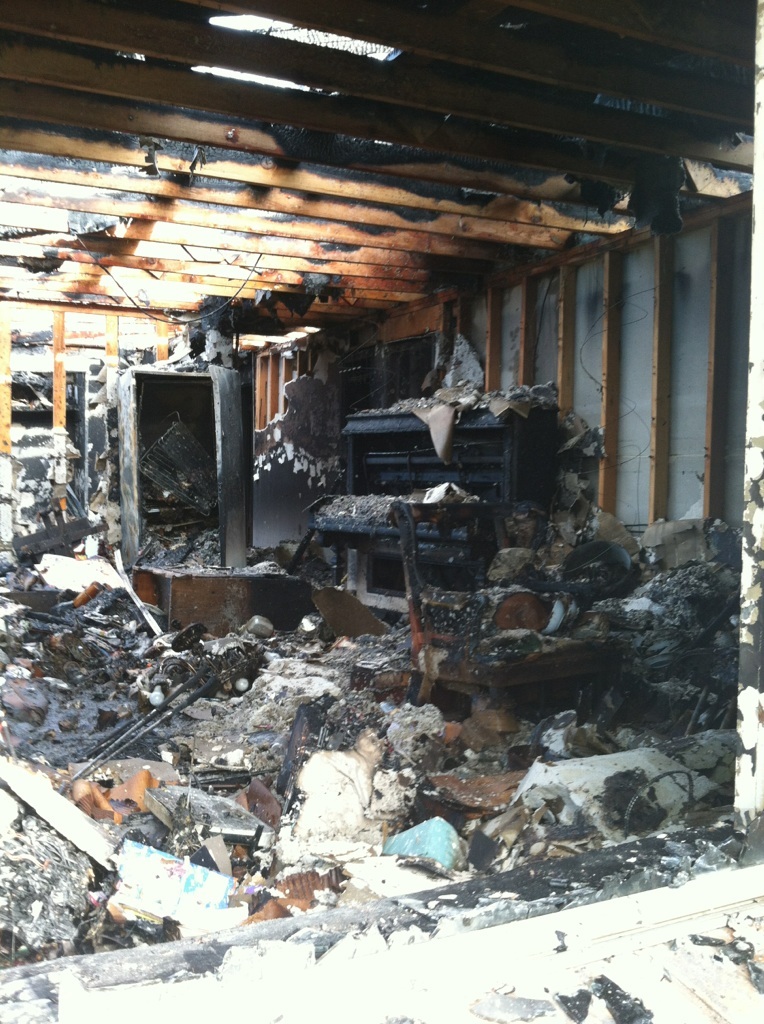
The home of a neighbor of a close friend of ours recently burned to the ground. This is a tragedy of the worst kind for anyone. Moreover, it was a place that housed troubled adults. Although no lives were lost, a home and a hope, at least for a time, were.

Sing, little ones. Sing, for the music still plays on…

Strike up the chord from rubbled keys,

fill up your ears on scrawny knees,

push through your threadbare notes with ease,

let the music play on.


For good or ill the band still played,

Titanic-deck’d no songs fore-stayed,

reduced to ash and dust parade,

yet the music played on.


When all has shuttered up within,

let  lonely hearts bestirred begin,

to harp, to trump, to violin,

for the music plays on.


And you, with your most treasured fears,

ensconced in burnt and golden tears,

a lilting note from God full cheers,

and the music played on.


“…and the flame shall not consume you. For I am the Lord your God.” Isaiah 43:2-3

Triangle poems V

Upstream

From the mouth of this river

I can see forever.

But just to see it

is not to know

the gifts it

can bring

me.

Downstream

From here I see what has past

from early dawn to dusk,

meandering stream

of hearts and minds

too broken

not to

feel.

Midstream

From here I can see the moon,

in all her bright glory.

But still I can’t see

what direction

this bright stream

will go

next.

Half-mast

Is it high or is it low?

Starboard bow or portside?

How are we to know

which direction

we are be’ng

led to

go?

Solitary

Here I sit in places, still,

with rhythms full of grace.

An occupied peace

and quiet voice

that summons

me to

stay.

Triangle Poems IV

Uprooted

Hands unseen reach from elsewhere

to dig and pull and strip

what little else remains

to be troubling

the places

where life

is.


Replanted

Hands unseen reach from elsewhere

to dig and hold and place

newness green and fit

 into rows of

strong and new,

wondrous

 life.


Piercèd Wonder

Breached against a sullen sky

one wicked afternoon,

sad eyes behold the

piercèd wonder.

He saw them

and he

wept.


Resignation

First it was impossible,

then it was just painful.

Now it’s both painful

impossible

and troubling,

but it’s

done.


Peace

A most illusory thing,

is this thing we call “peace.”

Too tightly grasp and

it leaves faster.

Let it go,

and it’s

yours.

prayer of the man without sight


So it is now to be, Lord,

that penance brings with it her own harder penance;

riddled throughout with pain, sweetly nuanced

with character like wine, red and melancholy and ripe?

Forsworn am I from joy so privily gotten

that, nestled deep in shallow places,

this hollowed out heart hallway, designed for

good and light and sweet,

lies overwrought, undone.

Paint has pealed from walls of these plastered eyes

inured to seeing what not to see.

I wish eyes and heart were unconnected.

For then, might I see.


Lord, tear out seeing eyes and replace them with blind

if only to remind me of what it was to see;


and then, blindly, to rejoice.


possibilities…

It was 4:00 am and, at the tail end of a recording project, I was desperate for a title track. I had already named the CD, “be that as it may.” Whimsical? Yes. Obtuse? Perhaps. But it was exactly the title that had reverberated in my head for months. That was what it was to be. However, I only had one more day of recording left both on the clock and on the dollar. I was frantic.

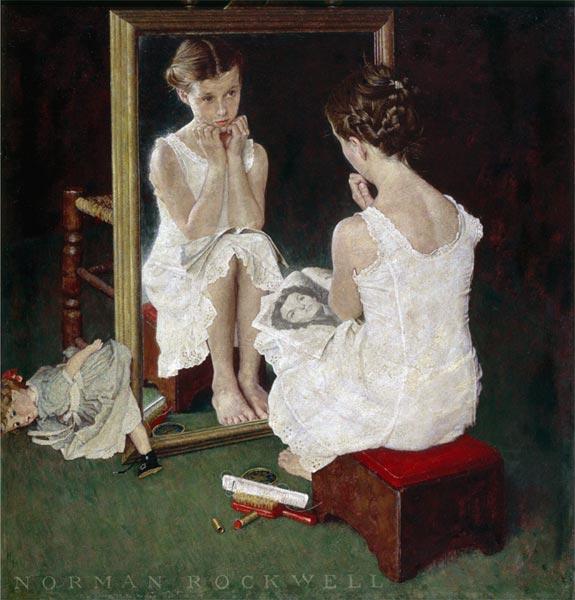
Then, a “chance” look across the table of my producer’s kitchen helicoptered my eyes to a picture. It was an image that would provide the muse from which the title song was about to come…in the space of 20 minutes. A solitary figure of a girl, not quite a woman. A girl longing for womanhood. She looks pensively, a little fearfully, into an attic mirror  afraid of what she might see; of what she might not see. She is a girl yearning for something else, something yet to come, just like she whose mirror it was in front of which she now sat might have thought years before.

The print spoke more than I could possibly write. It haunts me to this day. The following is the lyric from the song she inspired (and is downloadable on iTunes, by way of shameless plug).

be that as it may

Words & Music by Robert Rife

©10/16/98

Like roses hung from cellar walls,

Hints of words unspoken fall –

Suggestions of the fragrant fall,

Be that as it may.

When she’s sure there’s no one there

A young girl in a mirror stares

Welcomed in the arms of grandma’s rocking chair –

Be that as it may.


Be that as it may

Don’t let it be that we would stay

In waters of a winter’s day,

In the warmth of heaven’s glow we’ll say –

Be that as it may.


Hand to face, the touch of love

In bashful eyes, the look of love;

Gives to aching hearts a gentle shove,

Be that as it may.


Hiding in their living room

The fire’s warm but ends too soon;

At least it leaves two hearts in a swoon,

Be that as it may.


Be that as it may

Don’t let it be that we would stay

In waters of a winter’s day,

In the warmth of heaven’s glow we’ll say –

Be that as it may.


Life is like a cul-de-sac

We think we’ve grown, we’ve just come back

To where we were but with a few more facts,

Be that as it may.


Be that as it may

Don’t let it be that we would stay

In waters of a winter’s day,

In the warmth of heaven’s glow we’ll say –

Be that as it may.

Be that as it may.

Be that as it may…

conservatory, cellists and the blessing of un-cool

“…the glory of art is in receipt more than critique.”

Good friend and fellow blogger, Barbara Lane, has directed me to some very cool online places for inspiration, laughs, and encouragement. One site that has particularly seized my attention is Art House America. It is the brainchild of record producer, Charlie Peacock and his wife, Andi Ashworth and is staffed by more than a few stellar writers, Barb being among them as an intern. A few months ago, blogger Jennifer Strange submitted a piece entitled “Pride and Play”, which outlined her life as a classical violinist. The piece struck a chord (groan) with me. What follows is a fleshier version of my response to it.

“Brava! I, like you, have lived on the edges of un-cool. I was just acceptable enough to be part of the horde of “normal” kids but too artsy and quirky to dwell among the immortals. By the time I got to high school, I was popular but certainly no A-lister. My insistent intensity wed to a host of personal oddities denied entrance among the luminaries. Who cares? I thought. I had plenty of friends and hangers on, enough to get me through the harrowing hell that high school can be. My feigned demeanor as a Bohemian philosopher-poet, indy-intellectual-wannabe coupled with low blood pressure worked against me. I was a good faker, though, and learned to converse well among those of the socialite nosebleed section.

Being a musician helped. The sense of humor bought some street cred, too. These discoveries, although transient and unstable, at least provided me sufficient groundwork upon which to build a shaky cabin of self-esteem. But, unlike many of them, I was no male debutante-in-training. Instead, I was a gangly singer adopted by a blue-collar brewery worker and housewife into a 900 square foot bungalow in oil ‘n redneck rich Calgary, Alberta.

I’m especially grateful that none of the above provided enough of an obstacle to obtaining a full scholarship to Mount Royal College Conservatory where, as a Vocal Performance major, I studied art song, oratorio, opera and the dreamy female cellists in the symphony. And, since most of our professors were symphony musicians, we would get free tickets to almost anything they played – from Faure to Brahms, Shostakovich to Prokofiev, Schoenberg to Beethoven. It was all so heady and…cool…well, except for the part where my buddies and I would fight for the best seats high above the orchestra where the best sight lines were for staring down the daring, black gowns of the cellists in question. But I digress.

I can think of no reason to regret the loss of elitist membership in favor of the sublime connection to the world’s great music. Moreover, music was the backdrop for my awakening to Christian faith after graduation from high school. For this, and your piece reminding all of us of the uniting and redemptive power of music, I can be forever grateful. Besides, why do they always get to decide what’s cool?”

Yours in recitative, R

Writerly stuff: the gift of non-spoken words

Yesterday, I attended my first ever writer’s workshop. Well, ‘work’ for her, more ‘shop’ for me. I was reintroduced to the power of the perfect verb, and then lured away from over-use of rich, saucy, jaunty, or sultry adjectives (no extra charge for the built in analogy) and ultimately warned against falling in love with our own words.

Crap.

Just as juicy was my education in the necessity of nixing unnecessary words that simply tumble off the pen in a mottled ramshackle verbosity more for my own prideful perusal than to either advance the craft itself or, God forbid, get better at said craft.

See what I mean? Yeah, that’s why I went.

Lois Keffer, award winning author, editor and educator (I was not paid for the shameless plug) sat patiently through what, for her, seemed elementary, elemental; foundational. For us, it was the educational equivalent of a satiating a drunk’s need for naughty nectar. Her presence was steady without being stuffy and a quiet patience followed equally encouraging words. I’m not quite as strutty with my own material now, as I was the day before yesterday.

Again, crap.

Writing is not something I sat down to do one day because there was nothing good on the Comedy channel (although one certainly can help the other). Writing as art or leisure was once a foreign concept. And, although I’ve always loved wordy stuff, it never really crossed my mind before last year that writing was that and more besides.

It is prayer.

The act of dotting pages with jots and tittles becomes more captivating with each page. Despite the fact that the pages I write do not always titillate like good words should, it is becoming contemplative space for me; a non-lingual thin place. To speak too often is to bloat the air with noise, unlearned, opinionated or simply unneeded. Unless one has had the experience of silent retreat, words spoken will continue to dominate our daily experience robbing us of the larger intervals between them. Those are the places with gifts to give. They might otherwise tease us out of lethargy or pain if given the opportunity. Silence gives us pause to listen to no words and to more words. Different words. Holy words. Perhaps even healing words.

To write is not to speak. Not to speak means we must listen. To listen promises new gifts of love and insight. To write what we hear brings others into the dance with us.

Maybe that’s why I went.

Why the world needs the Celts

When one thinks of the term Celt or Celtic what images spring to mind? Is it the Pictish war-paint donned by William Wallace in Braveheart as he prepares to take Scottish troops into yet another conflagration with England? Is it the Military Tattoo at Edinburgh Castle where hundreds of overly plumed peacock pipers and drummers march to and fro in a celebration of Scotland’s warring past? Is it the drunken party at the local pub as it becomes abundantly apparent that you’ve walked into some secret society, all of whom are experts on their instruments, can drink more than any human should be capable of but with whom you feel completely welcome? Is it the great standing crosses of Ireland? Is it Larry Bird?

Whatever one may think of the Celts, one thing is sure: they were a people absolutely unique in history and centuries ahead of their time. They were an oral culture, a bardic people of story, song, poetry and mythology. As such there exists a great deal of misunderstanding regarding their exact history. In fact, they seem quite simply to have passed out of existence like a fisherman’s boat sailing into the morning mist.

One example of this relates to something I play on the bagpipes: Piobaireachd. Let me tell you how that is spelled: P I O B A I R E A C H D. It was never their intention to leave any letters for anyone else. Piobaireachd is the comingling of 2 Scots Gaelic words: piobaire, or piping with eachd meaning music. Hence, piped or piping music. Piobaireachd is the classical music of the highland bagpipe and is loosely based on the musical idea of a theme and variations. It was most likely developed by a highland clan dynasty of the MacCrimmons. But since there remains so little written evidence of the clan and their history, many believe them and their development of piobaireachd to be the fanciful fabrications of folklore.

There is plenty that we do know that can benefit us, however. The Christianity that emerged in Ireland, Cornwall, Brittany, Gaul, Isle of Man, Scotland and Wales possessed some valuable gifts. I list but a few.

The Celtic Christianity that thrived, undivided, from roughly the fifth through the twelfth centuries, is as deeply influenced by the culture in which it was birthed as the culture that was transformed by it. It is the child of the pagan culture that preceded it. We rationalists squirm a little at this idea.

We need the Celts because of their love for the poetic imagination and artistic creativity, building on a rich tradition of bards who sang the shared stories and exploits of her kin.

We need the Celts because of their similar love for kinship, relations and the warmth of a hearth. Their love of hearth and kinship translated in spiritual terms to what they called “anam cara” or “soul friends”, those with whom they shared their deepest joys, fears, sins, hopes, dreams.

The Celts were forever at odds with Mother Rome. To my mind, this equates to a paradox or at least to a willing suspension of seeming opposites. On one hand they were as profoundly Catholic as any other sect of Medieval Christendom. In the wearing of the tonsure they were the Nascar, permed mullet crowd. They yearned to be part of the larger Christian family. That is the Celtic way. On the other, they ever marched to the beat of their own drum – a Catholicism swimming in the quasi-pagan, swarthier style of the brooding Celts. They were both in and out.

We need the Celts because they insisted on the equality of all people in the eyes of God. They celebrated an egalitarianism in everything even allowing women to perform the Mass, a heresy of the first order even in contemporary, post Vatican II Catholicism! While worshippers throughout Europe frequented any number of great cathedrals, the Celts preferred smaller, homemade altars around which they would celebrate a deeply intimate Eucharist. Especially irksome to Rome was their liturgical calendar taken more from Druidic astrology than the accepted Church calendar. They were rogue in every imaginable way!

We need the Celts because of the monastic communities that flowered in Britain and elsewhere that became centers of classical education and learning, even possessive of literature outlawed by the Holy Roman Empire. As such, it can be said without exaggeration that the Celts kept knowledge alive and growing throughout the Middle Ages.

We need the Celts for their great love for the natural world and for preaching a God who loved it, too. They attached particular significance to particular animals, numbers, places and natural objects. Their spirituality was mystical in character, bathed in silence and solitude but rooted squarely in the everyday. It was a rich blend of the immanence and transcendence of God.

We need the Celts because of their unquenchably adventurous spirits, well known as explorers and/or missionaries to many places. Some have suggested that they may have been some of the earliest explorers to South America where Peruvian artwork mimics Celtic knot work.

We need the Celts to broaden our sense of time. They had an understanding of time that was less chronological than kairotic. In other words, they were not especially linear in their approach to life, love, faith and relationships. They valued the cyclical dimension of time, believing that by immersing themselves in the seasons of the year and uniting their lives with the liturgical seasons of the church, they could more effectively celebrate their journey through the sacredness of time.

We need the Celts for a further distinctive, related to their concept of time; their appreciation of ordinary life. Theirs was a spirituality characterized by gratitude, and in their stories we find them worshipping God in their daily work and very ordinary chores. We, as they, can see our daily lives as a revelation of God’s love.

We need the Celts since their spirituality has great ecumenical value, transcending the differences, which have divided Christians in the East and the West since before the Reformation.

We need the Celts because, unlike we who are often more interested in what to believe than Who to follow, their Christianity was a way of life, a spirituality lived gratefully each day, one day at a time.

Finally, we need the Celts because they give us reason and opportunity to party in the presence of the God who loves us. I’m in.