
Author: robertalanrife
I have spent the better part of my life as a professional musician. Primarily, that has meant the fun and challenging world of church music. Most recently, I have transitioned out of my role as worship and music director for Yakima Covenant Church, Yakima, Washington to global service in Edinburgh, Scotland. I'm a singer-songwriter, liturgist, poet, and writer. I love words. I love to read them. I love to write them. Most of all, I love the many intersections, like a sacramental tapestry, of life, liturgy, literature, the arts, and spiritual formation...oh, and I love haggis.
Not a journal
 This is not a journal.
Not in the strictest sense.
Nor is it a story with characters
that breathe and laugh
and smite down giants.
Nor is it a retrospective
with light shining backward
into alleys of remembrance.
Nor is it a memoir
bringing back to life
that which never died.
Nor is it a textbook
filed to a fine point –
more sharp than shine.
Nor is it a nursery rhyme
where hard stuff softens into
good lessons that go down easier.
This is not a journal.
It is a depository –
for words and their spirits.
For their capacity to hunker down
under the harsh heat of life’s longest hours
and make love until poetry appears.
This might be a poem.
Or, it might be a place where broodings
outwit the failed necessity of effectiveness.
Yes. Let’s call it poetry.
Let’s call it something looser, more lascivious
and lighthearted than expected;
more slow barefoot than mere distance.
For poetry is why we came into the world.
Shy lovers trip on words that ache, and
with limited alphabets, build a song.
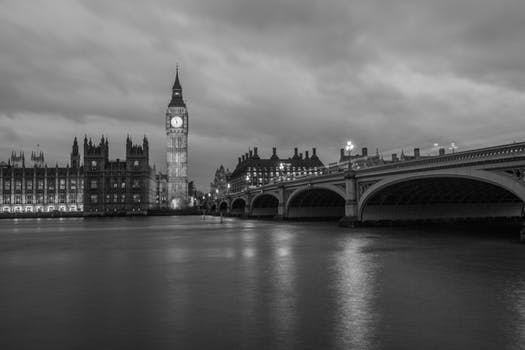
After London
She grabbed my hand –
caught, like a tufted
grove of hazy branches –
there were promises unspoken.
–
The full English –
an edible morning rainbow.
Then, it’s heads down, cell phone
ground-under-ground feud
down to centre-town.
–
It’s the skin-tight suits
the ‘please watch me not watching you’
as we shoot through this
time tested colon –
speeding train of Tartarus,
emerging once again,
limitless –
–
Chuffed, checkered, intermittent
chock-a-block
with gardens,
breathing –
assigns us together in the march,
a soldiery of urban totems.
–
1980s yoga pants
like validation tattoos – a rite of passage
for all who feed the push, heed
the pull, hunt the posh, herald their
potential.
–
Miles of scarves, stairs, scars, and stares (downward) –
brogues, bulimic beauties, and burkas –
pumps, pea-coats, pints, and paces –
faces down, chins up,
clacking heals, turning heads
chasing oil on water –
pooling from the duck’s back.
–
How much faster can we go
to get to where we always go
but have never seen,
here in jolly ole…?
–
Is there anything after London?
The world and me
I love the world as she has loved me –
she to me, a globule; I, to her, infinity.
She unpacks her bags each morning,
with equal fanfare, but no pretense.
_
She always was a generous friend –
a giver of pleasure,
waitress to my doubt,
bearer of my pain.
And, in her bosom? That longed for, long
home-s t r e t c h of the driver’s road.
_
Her knowing neck waits for my tears.
She sends reminders for me to
clap the dirt clods from my dusty hands
before I scratch out memories in clouds
or bend my knees to the great silence.
Toast her first, take her elder hand, look deep
inside her intuition – then ravage seems less likely.
_
“You pinch and toss, diminish and deride,
hoarding stolen jewels for your banality.
But I’ve borne you on my back,
wrapped you in my folded skin,
planted you in places
you’ve known, some not.
You’ve nursed these ancient breasts
into the submission of harmony,
the blessing of acceptance.”
_
So I come to rest in her scholarly pain.
There is a certain ennui in my small experience
that shows up when I meet her gaze.
And any of my rumpled thoughts or faces
meant as caves and shields
cannot cast shadows longer than the sum of her days.
_
I smile and we shimmy down the park bench
of years and stories told and lies perfected.
And she smiles because she knows everything
I’ve forgotten or discarded
or chosen to remember poorly.
_
I’ve bruised her.
She blesses me.
I love the world as she has loved me –
she to me, a mother; I to her, a child.
Hymn: A New Poem by Sherman Alexie
Why do we measure people’s capacity
To love by how well they love their progeny?
That kind of love is easy. Encoded.
Any lion can be devoted
To its cubs. Any insect, be it prey
Or predator, worships its own DNA.
Like the wolf, elephant, bear, and bees,
We humans are programmed to love what we conceive.
That’s why it’s so shocking when a neighbor
Drives his car into a pond and slaughter–
Drowns his children. And that’s why we curse
The mother who leaves her kids—her hearth—
And never returns. That kind of betrayal
Rattles our souls. That shit is biblical.
So, yes, we should grieve an ocean
When we encounter a caretaker so broken.
But I’m not going to send you a card
For being a decent parent. It ain’t that hard
To love somebody who resembles you.
If you want an ode then join the endless queue
Of people who are good to their next of kin-
Who somehow love people with the same chin
And skin and religion and accent and eyes.
So you love your sibling? Big fucking surprise.
But how much do you love the strange and stranger?
Hey, Caveman, do you see only danger
When you peer into the night? Are you afraid
Of the country that exists outside of your cave?
Hey, Caveman, when are you going to evolve?
Are you still baffled by the way the earth revolves
Around the sun and not the other way around?
Are you terrified by the ever-shifting ground?
Hey, Trump, I know you weren’t loved enough
By your sandpaper father, who roughed and roughed
And roughed the world. I have some empathy
For the boy you were. But, damn, your incivility,
Your volcanic hostility, your lists
Of enemies, your moral apocalypse—
All of it makes you dumb and dangerous.
You are the Antichrist we need to antitrust.
Or maybe you’re only a minor league
Dictator—temporary, small, and weak.
You’ve wounded our country. It might heal.
And yet, I think of what you’ve revealed
About the millions and millions of people
Who worship beneath your tarnished steeple.
Those folks admire your lack of compassion.
They think it’s honest and wonderfully old-fashioned.
They call you traditional and Christian.
LOL! You’ve given them permission
To be callous. They have been rewarded
For being heavily armed and heavily guarded.
You’ve convinced them that their deadly sins
(Envy, wrath, greed) have transformed into wins.
Of course, I’m also fragile and finite and flawed.
I have yet to fully atone for the pain I’ve caused.
I’m an atheist who believes in grace if not in God.
I’m a humanist who thinks that we’re all not
Humane enough. I think of someone who loves me—
A friend I love back—and how he didn’t believe
How much I grieved the death of Prince and his paisley.
My friend doubted that anyone could grieve so deeply.
The death of any stranger, especially a star.
“It doesn’t feel real,” he said. If I could play guitar
And sing, I would have turned purple and roared
One hundred Prince songs—every lick and chord—
But I think my friend would have still doubted me.
And now, in the context of this poem, I can see
That my friend’s love was the kind that only burns
In expectation of a fire in return.
He’s no longer my friend. I mourn that loss.
But, in the Trump aftermath, I’ve measured the costs
And benefits of loving those who don’t love
Strangers. After all, I’m often the odd one—
The strangest stranger—in any field or room.
“He was weird” will be carved into my tomb.
But it’s wrong to measure my family and friends
By where their love for me begins or ends.
It’s too easy to keep a domestic score.
This world demands more love than that. More.
So let me ask demanding questions: Will you be
Eyes for the blind? Will you become the feet
For the wounded? Will you protect the poor?
Will you welcome the lost to your shore?
Will you battle the blood-thieves
And rescue the powerless from their teeth?
Who will you be? Who will I become
As we gather in this terrible kingdom?
My friends, I’m not quite sure what I should do.
I’m as angry and afraid and disillusioned as you.
But I do know this: I will resist hate. I will resist.
I will stand and sing my love. I will use my fist
To drum and drum my love. I will write and read poems
That offer the warmth and shelter of any good home.
I will sing for people who might not sing for me.
I will sing for people who are not my family.
I will sing honor songs for the unfamilar and new.
I will visit a different church and pray in a different pew.
I will silently sit and carefully listen to new stories
About other people’s tragedies and glories.
I will not assume my pain and joy are better.
I will not claim my people invented gravity or weather.
And, oh, I know I will still feel my rage and rage and rage
But I won’t act like I’m the only person onstage.
I am one more citizen marching against hatred.
Alone, we are defenseless. Collected, we are sacred.
We will march by the millions. We will tremble and grieve.
We will praise and weep and laugh. We will believe.
We will be courageous with our love. We will risk danger
As we sing and sing and sing to welcome strangers.
©2017, Sherman Alexie
Going Over Things
Like under-inflated tires meant for better roads,
the sheen wears off until tracks become ruts
and steering makes no sense.
Now they wonder out loud if pitch and yaw can match
the swoop and dive of former days.
And they ask themselves the only questions
worthy of easier breathing and potato salad,
fresher still than the arrival of these moments –
unbearably skint of certainty,
but crouching in the dew of possibility.
This is no John Steinbeck novel they chuckle uneasily.
But it sure bears a resemblance to those sullen characters
pulled from page to thought, from thought to talk
and back again.
And even Oklahoma dust tastes good in a mouth
full of hope, conversations pointed in.
So, like throats yearning for rain,
they steer the bow of an old truck into new wind.
An uneasy road curls herself, snakelike,
hiding just underneath – not so much friend
as necessity.
Unlikely companions, no longer in remission,
make plans on the yawning road before them.
Regret
Somewhere down among the sheets,
between the spaces in loose gravel from nighttime sweats
lies the answer to an unasked question.
Somewhere underneath the skin of things
is poised another wrinkle, adding suggestions
to the game of chances only played by winners in drag
or posers lost in long hallways.
Somewhere up among the heights of nether
is held packages of days, a fistful of years
soon to be released upon the cold, dark land.
Somewhere you awaken from the same nightmare
everyone has, standing before a crowd
leaning forward to listen, and you with pants at your ankles,
a mouth full of sand.
But the nightmare is real, you are not.
And it’s the speech you can’t remember,
adding salt to the wound,
grease to the pole,
fire to a barrel bottom.
What of it? he said.
What of it? he says.
What if there were the solemn chance of a reprise
to a time, long forgotten but fresh-remembered?
A chorus to a bad song?
A bad song on repeat?
Old onions on ice cream?
Frozen water in the pipes
when all you need is a drink?
Surely there can be one straw long enough
to snatch from the fist?
Or are they there just to tease you for
the risk of un-lived truth?
Relief that the ground will still catch you?
Under-thought high dives into a dry pool?
Over-thought reasons for the same?
Somewhere, around the perimeter, is a chorus-line
taunting from a finish-line you did not paint
in a race you never trained for.
Somewhere, you’ve stopped running to find it.
Somewhere has found you.
Spirituality, Imagination, and Pole-Dancing
I think often, and occasionally pontificate, on the spiritual practice of creativity; the places they mutually inform and intersect, the artesian possibilities of art-making. It has been for me a means of keeping a few useful items on my mental table, known to topple over from time to time. It means reading. Lots of reading. Further, it means writing about and because of what I read.
Some of the best stuff gets a chance to percolate, and then regurgitate back onto the page. In the process, some of that wordy goodness forces its way into me. Into who I am becoming. Why I am becoming. And for whom.
Two prevalent ideas in American society are mutually exclusive: spirituality and capitalism. They are the philosophical bed-mates of spirituality and profitability (otherwise known as the New Age Movement or the Christian publishing industry), or sex and time management (although it would be fun to explore the correlation).
Even as one who writes about this stuff quite regularly, when the best considerations come along, it behooves me to sit back and let them have at it. Besides, what follows provides much of my reading fare these days and finds its way into my own words anyway. Part of that fare is a weekly email from a website called Brain Pickings. It is dedicated to those things that titillate, inspire, educate, and sometimes enrage.

Today’s offering, excerpted from Ursula K. Le Guin’s book, Words Are My Matter: Writings About Life and Books, 2000–2016, with a Journal of a Writers Week contains a stimulating quote that makes this point.
In America, the imagination is generally looked on as something that might be useful when the TV is out of order. Poetry and plays have no relation to practical politics. Novels are for students, housewives, and other people who don’t work. Fantasy is for children and primitive peoples. Literacy is so you can read the operating instructions. I think the imagination is the single most useful tool mankind possesses. It beats the opposable thumb. I can imagine living without my thumbs, but not without my imagination.
I hear voices agreeing with me. “Yes, yes!” they cry. “The creative imagination is a tremendous plus in business! We value creativity, we reward it!” In the marketplace, the word creativity has come to mean the generation of ideas applicable to practical strategies to make larger profits. This reduction has gone on so long that the word creative can hardly be degraded further. I don’t use it any more, yielding it to capitalists and academics to abuse as they like. But they can’t have imagination.
Imagination is not a means of making money. It has no place in the vocabulary of profit-making. It is not a weapon, though all weapons originate from it, and their use, or non-use, depends on it, as with all tools and their uses. The imagination is an essential tool of the mind, a fundamental way of thinking, an indispensable means of becoming and remaining human.
Good stuff, right?
Because I knew some excess debt-stress would be great for my spiritual development I took a master’s degree. In Spiritual Formation and Leadership. You know, ’cause…why not, right? It was the altruistic alternative to nautical knot-tying or selling chain-link fence. In truth, it was three of the best years of my adult life. But, already, I digress.
One of the courses necessary for graduation (the only one with the word leadership even attached), offered no small consternation for me. The required texts were bent on forcing spiritual practice onto corporate America like pole dancer nipple pasties (yes, I note that collective groan). I swore to the nipple gods that, should I read one more shitty leadership book that culls its guiding principles from some guy who made millions building chairs, I’d learn pole-dancing myself while reading it aloud in the village square.
For leadership, give me Desmond Tutu, Ernest Shackleton, Rosa Parks, Ghandi, Maya Angelou, or Martin Luther King, Jr. any day over these assholes. For imagination, give me the spiritual practice of creativity, art-making divorced from some lesser ideal. Teach me the riches of poetry for its own sake. Take me to the canvas because, in its pulsating emptiness, I find my fullness. Stuff words in my mouth and place me on a stage where I can act out my inadequacies. Drop me on a dance floor so I can shake out my sins and sweat out my aggression. Let our imagination provide the deus ex machina to our profit-lust, the perceived non sequitir of truth and beauty over pragmatism and effectiveness.
Lead me to beauty because the water’s good, not because it enhances my time management skills.
Morning, breath
As morning reaches where only night had been,
dew once more settles on the brittle earth
and breath returns to one,
so all can breathe again.
The living days
You turn and look at me
maybe for the first time
or the tenth, or the thousandth time
only to see what you knew you’d find –
a man looking back, whisker’d, aging,
eyes a little dimmer but still aimed at you.
I smell your morning breath
and think to myself how perfect,
how expected, how perfectly normal
and good and welcome.
The first kiss is always best
in its unnoticed awkwardness –
maybe because of it.
The shear warmth of your body
reminds me of our shared need
for presence and company and comfort
unattainable in the strivings of our days
but remembered in uncounted moments
spread over time and times and time again.
Our sagging bodies remind us of life
lived under common skies, the unexpected usual –
and it settles into me
in a kind of daylight reverie to what is.
We make love or something like it,
and vaguely remember the youthful bump
and grind of the easier, less calendared moments,
and scoff at our glorious, happy failure.
The pieces were better, stronger, truer
but more anxious and photoshop expectant.
But this is better in all its effort
and planning, and untelevised humanity.
These moments are charged
more insistently by words boring
and daily and dull, but real
and good and dressed in old pajamas.
It is the harmony of music left to
routine and chance and time, the choir of songs
sung to the easy marching hours
and resting nights full of the brighter
skies of want made less
in the beautiful tedium of the living days.
 Rob's Lit-Bits