The writer must create from one, or both, of two places: intention, the rhythmic pounding of chain gang-style word production, regardless of circumstance or existential readiness and/or secondly, inspiration, generally obtained through the navigations of a life-lived and sopping up the genius of creators much greater than oneself. The clear lack of words posted to this site in recent months is evidence that I fail miserably in the former. This one, however, comes from having read some of the collected poems in the posthumous collection: “100 Poems” of Seamus Heaney.
The best writers write much using little. They say fundamental things with brevity, economy, exactitude, and a settled, but discerned, relationship with their environment. Seamus Heaney is such a one.
This is brief, but I hope, settled in its own way. I pray it pokes at something in you that, like for me, has lain dormant. Maybe, together, we can reawaken to all the beauty still out there, waiting to be discovered and toyed with.
We climb over the short wall from one three hundred sixty-five day journey to begin another, hoping against hope that it is somehow better than the one before. We’ll be just a bit happier, thinner, better looking, less anxious, more of this and less of that. Ever an admirer of Romantic era poets, I give you the following as a poem to ring in the new year.
And, because Wikipedia is where all things are quickly found…
According to a story widely held in Waltham Abbey, the ‘wild bells’ in question were the bells of the Abbey Church. According to the local story, Tennyson was staying at High Beach in the vicinity and heard the bells being rung on New Year’s Eve.
Ring Out, Wild Bells (from In Memoriam)
By Alfred, Lord Tennyson
Ring out, wild bells, to the wild sky, The flying cloud, the frosty light: The year is dying in the night; Ring out, wild bells, and let him die. Ring out the old, ring in the new, Ring, happy bells, across the snow: The year is going, let him go; Ring out the false, ring in the true. Ring out the grief that saps the mind For those that here we see no more; Ring out the feud of rich and poor, Ring in redress to all mankind. Ring out a slowly dying cause, And ancient forms of party strife; Ring in the nobler modes of life, With sweeter manners, purer laws. Ring out the want, the care, the sin, The faithless coldness of the times; Ring out, ring out my mournful rhymes But ring the fuller minstrel in. Ring out false pride in place and blood, The civic slander and the spite; Ring in the love of truth and right, Ring in the common love of good. Ring out old shapes of foul disease; Ring out the narrowing lust of gold; Ring out the thousand wars of old, Ring in the thousand years of peace. Ring in the valiant man and free, The larger heart, the kindlier hand; Ring out the darkness of the land, Ring in the Christ that is to be.
Advent reaches its apex on Christmas Eve, pregnant with longing, when a pregnant teenager will surrender to the world a Saviour and light is restored to all that is dark. For this, we offer you this poem by Sir John Betjeman entitled simply, “Christmas.”
Thanks for sharing this journey with me, and…Merry Christmas!
We edge ever closer to the end of Advent and the beginning of Christmastide, or the season of Emmanuel. For today, we enjoy this gem from Alfred Lord Tennyson entitled, “In Memoriam XXVIII.”
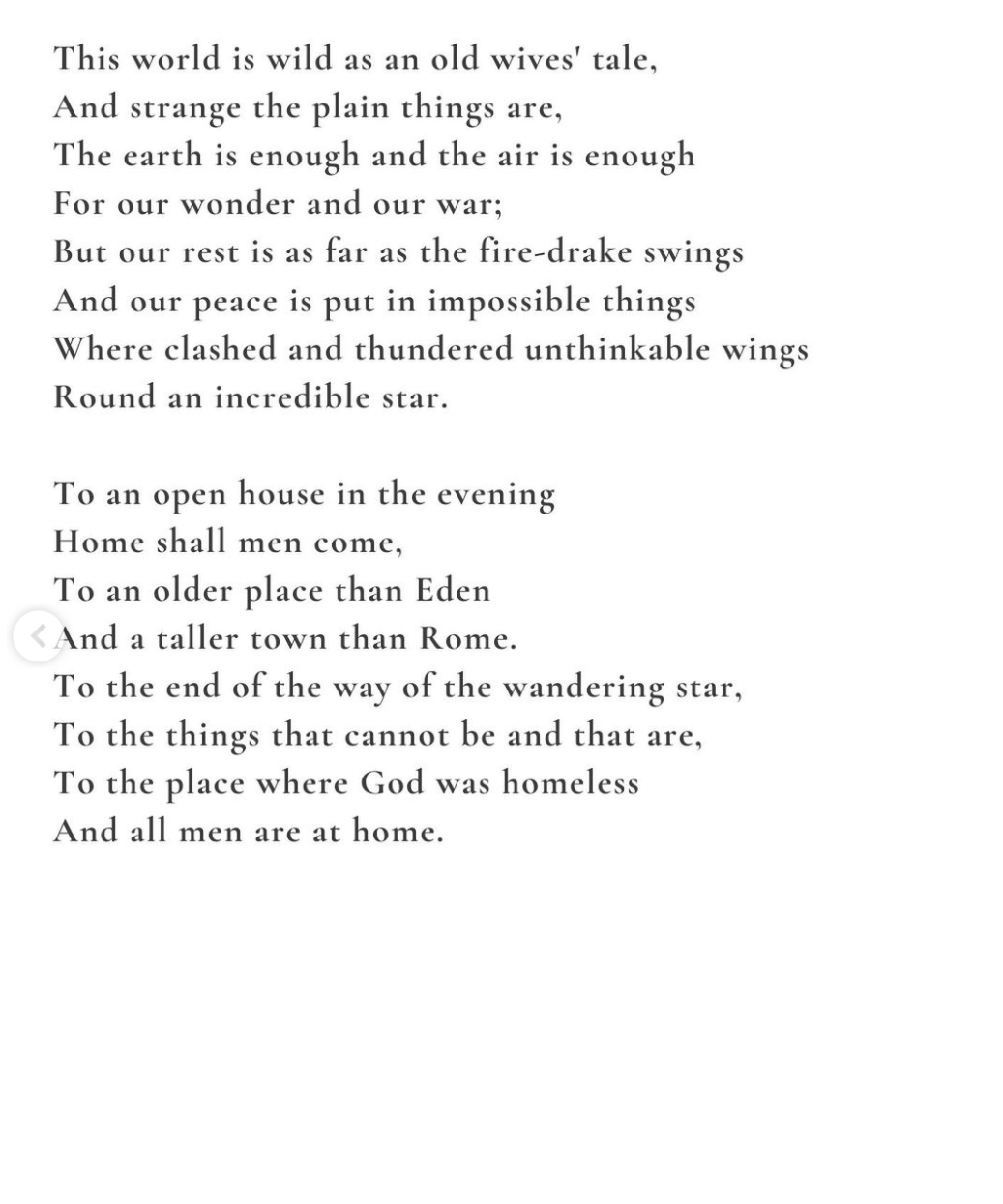
British philosopher, theologian, literary and art critic, G. K. Chesterton (1874-1936) was a man large of stature and imagination. He was the creator of the much-loved “Father Brown” stories. Today, I’m featuring his marvelous poem, “The House of Christmas.”
Despite being an Epiphany more than Advent poem, this is worthy of the time. This is “Bethlehem” by Charles Williams. Williams published many poems for his small parish magazine during his life. This one appeared in 1920.
Our poem today comes to us from none other than George MacDonald. The influence of this man on the great C. S. Lewis was well-known. He died before Lewis was born, but he still looked upon him as a spiritual father and referred to the great Scotsman as “my master.”
The poem is entitled, “A Christmas Carol For 1862: The Year of the Trouble in Lancashire.”






 Rob's Lit-Bits